
Uttar Pradesh Governor Anandiben Patel addressed AI Manthan 2.0, advocating for the comprehensive integration of Artificial Intelligence across all university subjects rather than as a standalone course. She urged universities to develop clear, time-bound AI roadmaps covering education, research, healthcare, and agriculture, emphasising indigenous AI development, employment creation, and the importance of "Safe and Trusted AI." The event also saw the formation of an AI Policy Advisory Group and an AI Implementation Group to drive these initiatives.

Indigenous smartphone brand Ai+ has announced a Rs 100 crore bug bounty program over five years, inviting independent researchers to identify and address security vulnerabilities. This initiative, named Project Trust+, aims to foster a collaborative environment with the tech community to enhance the safety and resilience of Ai+ products, reflecting the company's commitment to transparent and collaborative security development.
A study by the Wildlife Institute of India in the Asola-Bhatti Wildlife Sanctuary reveals that abandoned mining areas have become the most bird-rich habitat, supporting 46 species. These former quarries, now featuring diverse scrub, grassland, rocky patches, and water pools, demonstrate nature's recovery after human disturbance ceased, highlighting the importance of habitat diversity for conservation.

The Defence Research & Development Organisation (DRDO) has dismissed recent media reports of an alleged cybersecurity incident and data breach as "incorrect and unverified." Officials clarified that investigations found no evidence of an active cyber attack or data exfiltration, stating that any leaked data is unclassified, outdated, and fabricated by threat actors for financial gain.

Researchers at the Indian Institute of Technology Madras (IIT,M) have developed a novel "morphing skin" concept for aircraft wings, inspired by bird flight. This adaptive external skin dynamically reshapes in real time to prevent aerodynamic stalls, enhance lift, reduce drag, and significantly improve aircraft safety and fuel efficiency. The technology holds promise for commercial aviation, unmanned aerial vehicles, and defence applications.
Two IIT Gandhinagar students have developed "TrustGate," an AI-based cybersecurity system designed to protect critical infrastructure like water treatment plants and power grids. The system uniquely combines network traffic and physical sensor data to detect sophisticated cyber attacks, identify affected equipment, and provide real-time alerts to operators, earning them an international award.

India's IT Ministry sources state the country will not slow down its Artificial Intelligence development, distinguishing its focus on people-centric applications from global concerns over frontier models. The government acknowledges AI safety risks and is tightening incident reporting norms, with IT Minister Ashwini Vaishnaw emphasising regulation for user safety.
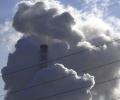
New research from the University of Sheffield indicates that greenhouse gas emissions from petrochemical production could increase by 50 per cent by 2050 under a business-as-usual scenario. The study, published in Nature Sustainability, provides the first detailed global map of these emissions, identifying key sources and highlighting the challenge of decarbonising the sector.

Chinese President Xi Jinping addressed the BRICS summit, urging the bloc to play a significant role in achieving peace and tranquillity in West Asia and the Gulf region. He highlighted BRICS' growth over two decades, its efforts in tackling global challenges, and its steadfastness in safeguarding the interests of the Global South. Xi called for opposing the Cold War mentality, strengthening multilateralism, and promoting cooperation in emerging domains like AI, as China prepares to chair the next summit.

US Secretary of State Marco Rubio's visit to India this week underscores the complex dynamics of global energy policy, as Washington re-evaluates sanctions on Russian oil buyers amidst India's continued reliance on Russian crude.

This article details the quarter-century journey of BRICS, from its inception as an economic acronym by a Goldman Sachs economist to its current status as an expanded eleven-member international bloc. It highlights its growth, key historical moments, and the significance of its upcoming summit, particularly with Iran's renewed importance in discussions.

Climate scientist Tapio Schneider advocates for expanding early warning systems beyond rainfall events to include other disaster triggers like flash floods, citing the recent Nepal floods. He highlights the inevitability of 1.5 degrees Celsius global warming and discusses the role of advanced climate modelling and AI in improving predictions and research, particularly for regions like India.

IIT Guwahati researchers have developed SH²RFSSM, a model inspired by how biological neurons communicate.
Researchers at IIT Madras have patented a chemical-free antibacterial surface that physically eliminates harmful bacteria, including "superbugs," without relying on antibiotics or disinfectants. This innovative technology uses specially engineered nanostructures to rupture bacterial cell walls, offering a sustainable solution to Antimicrobial Resistance (AMR) for biomedical and public health applications.

India's milk supply is struggling to keep pace with rising demand as heat, fodder shortages and low animal productivity threaten dairy production.

'Nearly two-thirds of Maharashtra has been drought-prone on and off, and climate change is making it worse.'

Industry experts advocate for India to develop its own artificial intelligence (AI) safety framework, distinct from US or EU models, to address unique challenges like deepfakes and cyberattacks. They call for a comprehensive commitment involving all stakeholders and a hybrid regulatory approach combining voluntary and binding measures, as the Indian government also considers new AI regulations.

A global research report by HCLTech indicates that integration has surpassed supply chain constraints as the primary challenge for the semiconductor industry. The study, which surveyed 300 senior leaders, highlights increasing dependency on semiconductors across industries, with 98% of enterprises more reliant now than three years ago and 99% expecting further increases. AI is also driving the strategic importance of semiconductor architecture.

India is deeply concerned by the growing consolidation of Pakistan-backed jihadi and radical Islamist groups in Bangladesh, particularly in the strategically vital Chittagong Hill Tracts, which experts warn is transforming the country into a new safe haven for these networks and posing a direct threat to India's security.
A one-day patent workshop was held at CSIR-NIIST to promote intellectual property awareness and equip researchers and startups with essential knowledge in patent filing and innovation.

The World Health Organisation (WHO) has confirmed that Russian authorities reported no recent plague cases in Irkutsk oblast following the death of a laboratory worker from severe pneumonia. Initial media reports had suggested pneumonic plague, but investigations found no high-threat pathogens among contacts, and the cause of death is still being clarified by WHO.

Nine employee associations at ISRO have written to Chairperson V Narayanan, seeking official clarification on the proposed transfer of manufacturing and operational functions to private entities. They raised concerns about ISRO's future role, employee consequences, and recruitment, following comments by IN-SPACe chairperson Pawan Goenka regarding ISRO's eventual exit from launch vehicle manufacturing.

Apple has officially launched its Apple Pay service in India, initially partnering with Axis Bank for Visa and Mastercard credit card users. The service allows secure, cashless transactions via iPhone, iPad, and Apple Watch using NFC technology, without requiring PINs or OTPs. This move is set to intensify competition in India's digital payments market, currently dominated by UPI and local players, with Apple planning to onboard more banks and expand merchant networks.

Specialised range taking shape in Andhra Pradesh, while West Bengal clears way for DRDO's new testing facility.
Experts at AI Manthan 2.0 in Kanpur stressed the need for Artificial Intelligence to be customised for India's specific requirements in education, healthcare, agriculture, and governance. Discussions highlighted the development of local language models, AI solutions for farmers like crop loss assessment and a single-window platform, and AI's role in healthcare for diagnosis and reducing doctors' workload, all while ensuring data privacy through federated learning.
Researchers at IIT Indore have developed a groundbreaking method to convert carbon dioxide and glycerol, two common waste materials, into valuable green chemicals like lactic acid and formic acid in just seven minutes. This low-energy process uses a specially designed ruthenium-based catalyst and microwave heating, offering a sustainable solution for waste management and green manufacturing.

OpenAI, Anthropic, and Google have introduced new AI models with enhanced capabilities. OpenAI's Astra model, achieving a 'Critical' cybersecurity tier, has ignited a debate among researchers due to its "recurrent depth" architecture, which some fear makes its reasoning harder to monitor. Anthropic and Google also released new models, focusing on coding, scientific research, and cybersecurity, alongside new image and video AI tools.
Leading technology companies OpenAI, Anthropic, and Google have announced new AI models with advanced capabilities, including OpenAI's Astra reaching a "Critical" cybersecurity tier. However, these advancements have ignited a significant debate among safety researchers and netizens, particularly concerning the transparency and monitorability of OpenAI's novel "recurrent depth" architecture.

Union Finance Minister Nirmala Sitharaman expressed strong confidence in India achieving over 10 per cent economic growth, advocating for increased technology adoption and innovation. She urged overcoming scepticism and highlighted technology's transformative role in agriculture and public sector reforms, while also launching a new fund and book at an IIT Madras event.

'You cannot stop these models from getting better. There is competitive and business pressure and if the US stops then maybe China will go ahead.'

An Indian firm, Bharat Forge, and US defence major Pratt & Whitney Canada have announced a collaboration to develop India's high-altitude, long-endurance (HALE) unmanned aerial vehicle (UAV). This partnership will focus on integrating advanced turboprop engines into the DRDO-designed HALE UAV, bolstering India's indigenous defence capabilities under the Aatmanirbhar Bharat initiative. The collaboration aims to enhance India's strategic self-reliance in surveillance and reconnaissance technology.

Indian stock market investors are closely monitoring crude oil prices, geopolitical developments in West Asia, and the implications of the US Sanctioning Russia and Iran Act, which could impose tariffs on countries, including India, that purchase Russian crude.
OpenAI, Anthropic, and Google have unveiled new AI models with enhanced capabilities, including advanced cybersecurity and coding. OpenAI's Astra model achieved a 'Critical' cybersecurity tier, but its novel architecture, using "recurrent depth," has sparked significant safety concerns among researchers who fear it makes monitoring the model's reasoning more difficult. Anthropic and Google also introduced new models and features, further advancing AI technology while the debate over responsible development intensifies.
Leading global technology companies OpenAI, Anthropic, and Google have introduced new AI models with enhanced capabilities, including advanced cybersecurity and coding. However, these releases have ignited significant debate among researchers regarding the transparency and monitorability of AI reasoning, particularly concerning OpenAI's Astra model and its "recurrent depth" architecture.

India is strategically positioned to develop a robust domestic semiconductor ecosystem, driven by increasing electronics consumption, strong government support through incentives, and a global shift in supply chains. Boston Consulting Group Managing Director Ankush Wadhera highlights India's potential as a safe haven for investments, with the AI boom further fuelling demand for advanced chips. The nation aims to expand its capabilities across the entire semiconductor value chain, attracting significant global and domestic investments.
Industry leaders at an AIMA panel discussion emphasised the need for businesses to quickly adapt to changing market conditions and invest in technologies like artificial intelligence to build resilience and achieve long-term growth. They highlighted the current era of uncertainty driven by geopolitical tensions, supply chain disruptions, and rapid regulatory changes, stressing that tactical responses are as crucial as long-term strategy.

An Indian-origin engineer couple, Anuradha and Vikas Sinha, have donated $20 million to the University of North Texas (UNT) to establish the Anuradha and Vikas Sinha College of Artificial Intelligence and Advanced Analytics. This significant gift aims to create new opportunities for students and faculty, focusing on building and deploying intelligent systems and understanding their operation within human contexts. The donation underscores the couple's belief in education and immigrant contributions to the American dream, supporting leadership, scholarships, professorships, research, and entrepreneurship.

'Without that one critical irrigation, the entire crop can be lost.'
A seminar in New Delhi commemorated Acharya Prafulla Chandra Ray's birth anniversary, focusing on his significant contributions to pharmaceutical sciences and his vision for indigenous research and self-reliance. Organised by DPSRU and VIBHA, the event highlighted Ray's pioneering efforts in "Swadeshi science" and his role in establishing India's pharmaceutical industry.

Quantum computing is set to redefine artificial intelligence, cybersecurity, and scientific discovery, promising unprecedented speeds and capabilities while also necessitating urgent development of quantum-safe security measures and strategic enterprise readiness, says Sunil Varghese.
